
Israel destroyed a building over my brother and his child to reach someone else
They were not the target. They were the outcome.

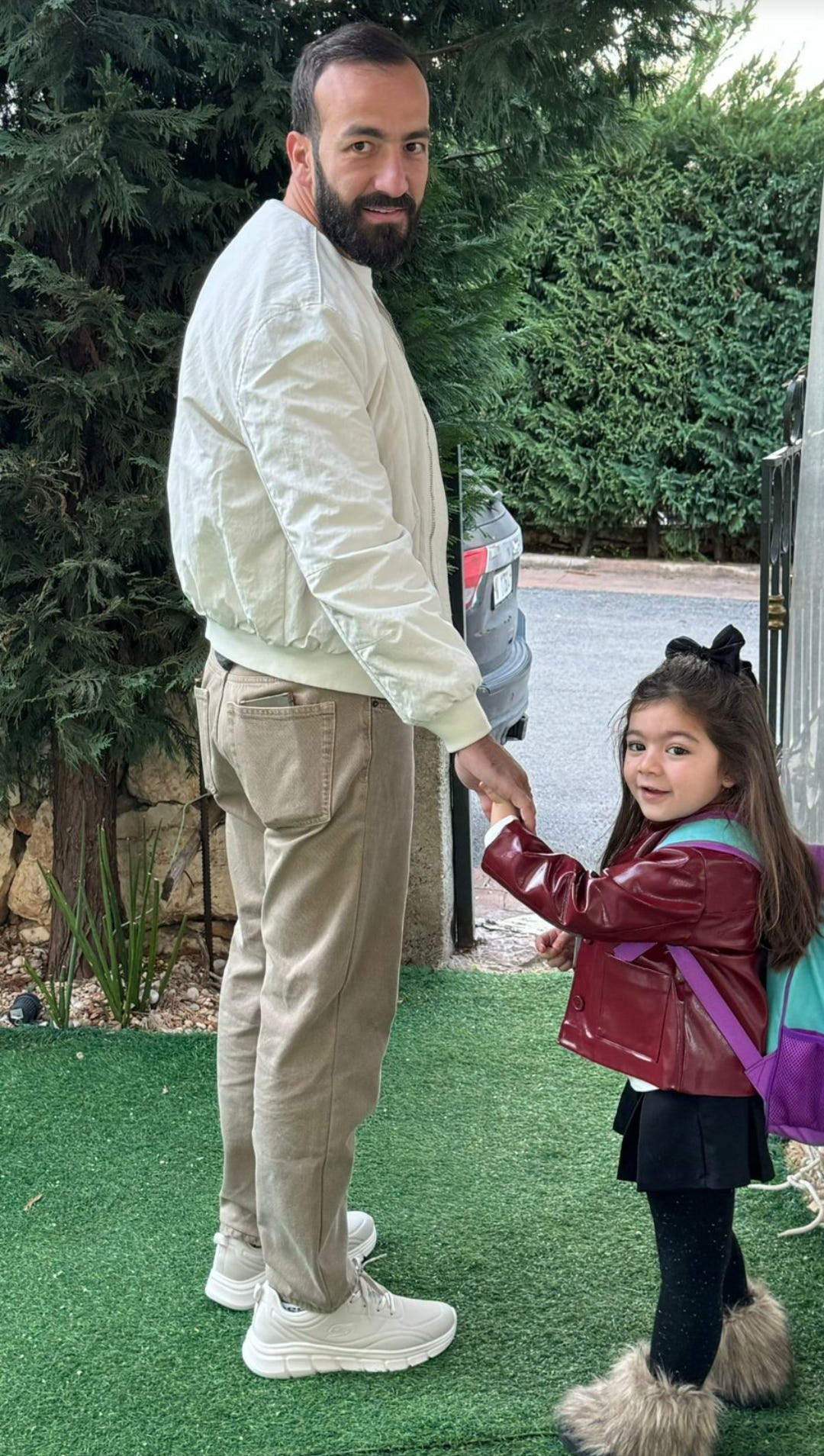
My brother and his four-year-old daughter were killed in their home because the target was someone else.
That is not a metaphor.
That is not rhetoric.
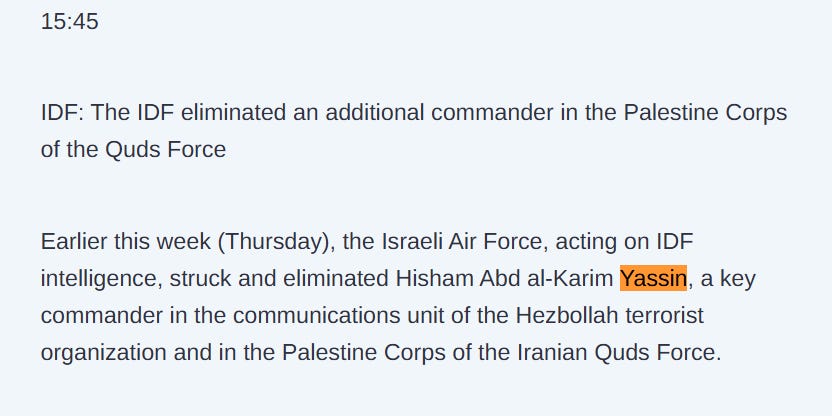
That is, according to the Israeli military’s own statement, a fact.
Mohamad once said, “If I die, share this video”.
The night everything ended
It was a Thursday, March 12, around 2 a.m.
My brother, Mohamad Jaafar Shehab, was in his home in Aramoun, near Beirut.
His daughter, Taline, was sleeping. His wife was there too.
There was no warning.
Then the missiles hit.
Several strikes hit the building. The upper floors collapsed directly onto their apartment.
They did not run.
They did not hide.
They did not even wake up to understand what was happening.
They were killed instantly.
His wife survived barely. Her heart stopped at one point before doctors brought her back. She now faces years of surgeries and recovery.
This is not a battlefield story.
This is what happens inside a bedroom.

“They were not the intended target”
The Israeli military later stated that the strike targeted a specific individual in the building. Someone else, on another floor.
Not my brother.
Not his child.
This single detail changes everything.
Because once you say that the people killed were not the intended target, you are no longer talking about a “successful operation”. You are talking about consequences.
And in international law, consequences matter.
The illusion of “proportionality”
In war, there is a concept called proportionality.
It is often presented as a balance:
Is the military advantage worth the civilian cost?
But when you look at it from the ground under the rubble of a collapsed building, this concept becomes something else entirely.
What is the “military advantage” that justifies killing:
a father
a four-year-old child
inside their home
at night
without warning
And more importantly:
Who calculates that equation? And who is held accountable when it fails?
“Collateral damage”: a language that hides reality
There is a phrase used frequently in modern warfare:
Collateral damage.
It is a clean phrase. Technical. Neutral.
But it hides something very specific:
It hides the fact that human beings, people with names, histories, and families, are being reduced to variables in a calculation.
My brother was not “collateral.”
Taline was not “collateral.”
They were the outcome of a decision.
The AI problem no one wants to talk about
There is another layer to this.
Modern targeting systems increasingly rely on AI-assisted decision-making, or systems designed to identify targets faster, process more data, and accelerate strikes.
These systems are often described as “more precise”. But precision does not equal protection. Precision means:
→ You hit exactly what you decided to hit
It does not mean:
→ What you decided was right
When the wrong decision is made faster, with more confidence, and at scale, the result is not fewer civilian deaths.
It is more efficient in civilian deaths.

This is not an isolated case
My brother’s story is not unique.
It is part of a pattern.
Over 2,000 people have been killed in Lebanon in recent weeks, including at least 172 children.
Entire residential areas have been struck without warning.
Human rights organizations have documented strikes in densely populated areas with mass casualties.
A broader investigation by The National shows how tactics used in Gaza are now being applied in Lebanon, including strikes on civilian areas and evolving patterns of warfare.
The Washington Post documented similar patterns. Children killed in homes far from front lines.
And in my BBC interview, I tried to explain what it means to lose a brother and a child in seconds.
Who was Mohamad?
If this story is only about how he died, then it is incomplete.
Mohamad was not just a victim.
He was:
a professional working in drone technology.
someone who collaborated with institutions, including the Lebanese Army and international programs.
a contributor to media and production in the Arab world.
a person building a future.
But above all, he was a father.
And Taline?
She was four years old.
She was not a statistic.
She was not a case study.
She was a child who loved her father and followed him everywhere.

What happens after the strike?
There is something the headlines rarely show:
What comes after?
A wife who wakes up to find her entire immediate family gone.
A body is buried away from its home village because war prevents proper mourning.
A family trying to reconstruct meaning from something that has none.
War does not end when the missiles stop. It continues inside people.

This is now a legal case
We have started building a legal case with international organizations.
Not for revenge. But for something very simple:
To force the question to be asked in the right place.
If civilians are killed inside their homes, and they were not the intended target, then this is not just a tragedy. It is something that requires examination.
The most dangerous thing
The most dangerous outcome is not what happened to my brother.
It is what happens if this becomes normal.
Because once it becomes normal, that:
civilians die in their homes.
Children are killed in “targeted strikes”.
And no one is accountable.
Then the system is no longer failing. It is working exactly as designed.
My brother was not the target.
But he is dead.
And the question now is not what happened.
The question is:
What will be done with that fact?
Without accountability, this cycle of violence will never end and it will impact the whole world. All the support to you in this case.